
Is Weight Training Safe for Youth Baseball Players?
We often get asked this question by parents at game time or lessons.
“Is my kid too young to lift?”
“Isn’t lifting bad for their arm?”
“I don’t want them getting bulky or hurting themselves.”
Those are valid concerns. Most parents aren’t trying to raise a weightlifter out of their kid; they just want to make sure they’re doing the right thing for their player.
Weight training for youth baseball players can be a huge positive, as long as it’s being done correctly. And when it comes to doing it correctly, it has very little to do with heavy weights.
Why Weight Training Matters for Youth Baseball Players
Baseball is a full-body sport, even though it does not always appear to be. Every part of the game, from hitting to throwing to running to fielding, requires your whole body to function with strength, balance, and control.
Resistance training, done correctly, helps young players:
- Build up strength in their legs and core
- Improve balance and coordination
- Be more nimble on the pitch
- Feel more confident in their body
For most kids, the biggest benefit isn’t power. It’s control. When players feel stable and strong, everything else-throwing, hitting, sprinting-gets easier.
What Age Should Kids Start Weight Training?
This is the first question every parent asks.
It can be reassuring to know there’s no specific age when weight training suddenly becomes “safe.” What matters most is how it’s done, not how old you are.
For younger athletes, the weight training process may look like this:
- Bodyweight exercises
- Light resistance training
- Learning proper movement patterns
As kids grow and their coordination improves, they can slowly be introduced to external weights with proper guidance. The priority, though, is always the movement itself. The equipment comes second.
If someone can’t squat, hinge, push, or pull correctly, adding more weight simply doesn’t make sense.
Common Myths About Youth Baseball Weight Training
There’s a lot of outdated advice floating around. Let’s clear up a few common myths.
“Lifting stunts growth.”
No evidence suggests that properly supervised strength training stunts growth. Poor technique and unsafe programs are the issue, not resistance training itself.
“Weights will ruin my kid’s throwing arm.”
Poor mechanics and overuse are what stress arms. Smart strength training often supports arm health by improving shoulder stability, posture, and overall body strength.
“Baseball players only need to throw and hit.”
Throwing and hitting are important, but they’re built on how well the body moves. Strong legs, hips, and core make both skills more efficient and sustainable.
What Youth Baseball Weight Training Should Actually Look Like
A youthweight training session does not need to feel like a hardcore session in a gym environment. It needs to feel structured, relaxed, and focused.
A typical session might include:
- Bodyweight squats and lunges
- Core work, such as planks and carries
- Move to Light dumbbell/resistance band exercises
- Basic Pushing and Pulling Movements
- Movement Drills for Balance and Coordination
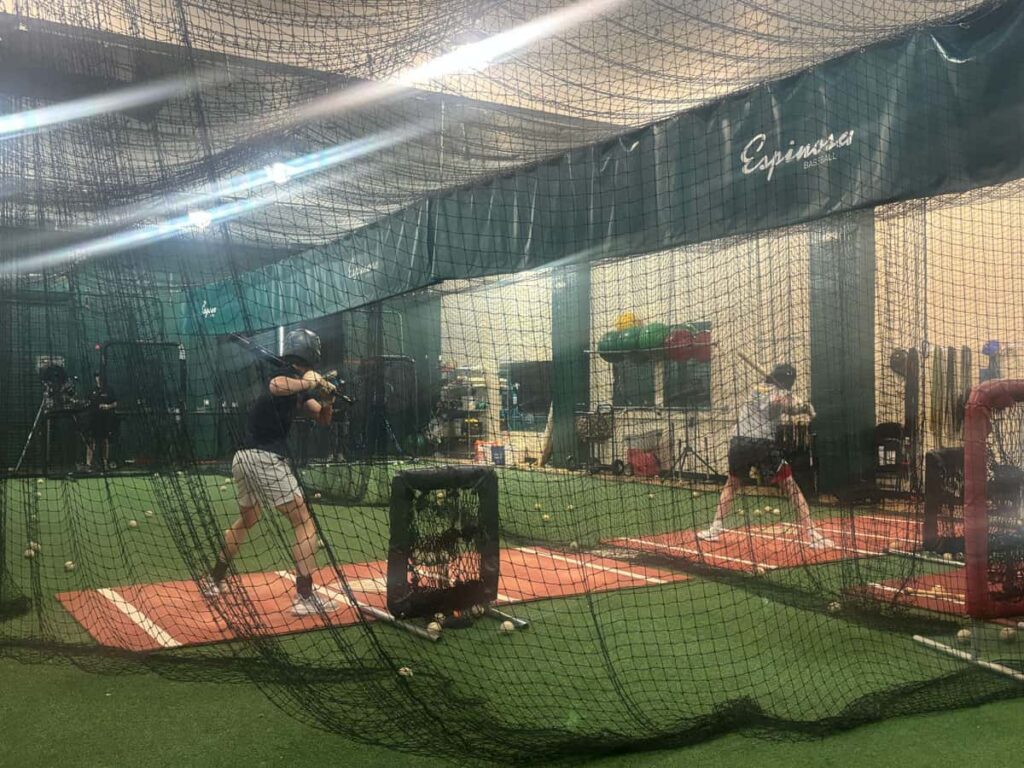
At Espinosa Baseball, we cue players to move slowly and with control. We watch posture, joint alignment, and breathing. Coaches stay hands-on, correcting form and keeping the focus on quality reps, not heavy weight.
For younger players, training can be 30-45 minutes, making sure the players feel “worked”, not exhausted.
How Weight and Strength Training Helps Prevent Injuries
Baseball is repetitive. A lot of throws. A lot of swings. A lot of weekend tournaments and long seasons.
Strength training helps by:
- Supporting joints and connective tissue
- Improving posture and movement mechanics
- Developing Resilience in the Legs, Hips, and Core
- Reducing fatigue during the latter part of games/tournaments
When players are stronger and move better, they’re often more durable during long seasons.
Balancing Weight Training with Youth Baseball Practice
With school, practices, games, and family time, kids are already going full speed. Strength training needs to complement all of that, not add to the stress level or become another time-consuming activity.
Two strength training sessions a week are already more than enough for most kids who play youth baseball, provided that they are kept short, sweet, and age-appropriate.
During baseball season, baseball is the priority. The focus is on making sure kids feel good, move well, and recover well so that they can show up to practices and games with energy and enthusiasm. During the off-season, there is a bit more time to focus on building a stronger foundation and developing better movement and strength skills.
At the end of the day, strength training should make baseball easier and more enjoyable, not something that your kid has to struggle through.
Our Philosophy at Espinosa Baseball
We coach baseball players like athletes, because that’s what they are.
It all begins with movement for us. If a kid can move well, then strength training will actually work. And if strength training is effective, then the baseball training just falls into place. It all relates.
We keep everything age-appropriate and focused on mechanics. We are more concerned with consistency than intensity. The last thing we want to do is put a kid on heavy weight. We want to make them feel strong, stable, and confident as they develop.If you are wondering whether weight training is right for your child, then come on down and chat with us or reach out today. We will take a look and provide you with an honest assessment.