
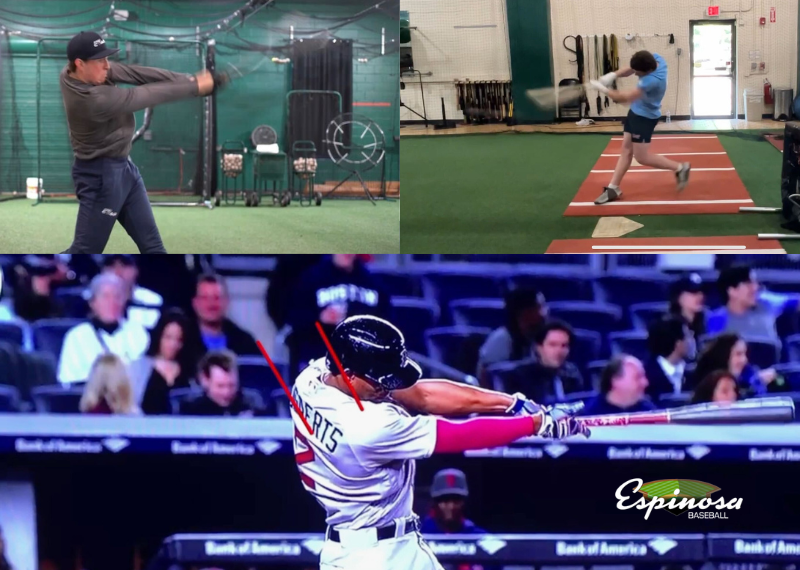
Baseball training shouldn’t be intense or complicated. It should be a helpful process that allows youth players to practice a little better each week without taking the fun out of the game.
Most youth players don’t need advanced training regimens for baseball workouts. Young athletes often benefit more from simple, consistent movement than from advanced drills. When they’re allowed to learn how their body moves and build comfort with throwing and swinging, confidence comes first, and progress follows.
At Espinosa Baseball, physical training incorporates all these concepts. We emphasize basic motion, fundamental skills, and age-appropriate strength to foster natural development.
Below are 12 baseball workouts we regularly do with our youth players. They aren’t flashy, but they deliver winning results.
How To Approach Training At A Young Age?
It’s important to begin by figuring out your expectations and goals before workouts are discussed.
Small exercises performed a few times a week will always work better than extended sessions. As younger players get exhausted, their movements will break down. As their movements break down, bad habits tend to creep in. We make sure that youth players stay fresh and engaged, allowing them to learn with good form and confidence instead of frustration.
Two or three focused sessions a week are usually enough. The aim is to feel successful and not exhausted.
Hitting Workouts
With younger baseball players, balance and contact should take priority over power.
1. Tee swings
Tee work allows players to slow everything down to work on the fundamentals. It’s also where players develop balance, posture, and make solid contact without the time constraints of reacting to a moving ball. It’s where young players develop an idea of making solid contact and where the ball needs to be hit out in front of them. Practice tee work to build confidence in players’ fundamentals.
2. Front toss
Front toss represents a natural progression from tee work. It involves speed and tracking of the ball while maintaining a speed that is slow compared to game speed. The process of front toss helps young hitters understand how to load, track the ball, and execute a controlled swing. The speed of front toss is considerably slower compared to game speed.
3. One-hand swings
Alternating the use of one hand at a time will allow the players to develop good barrel awareness. It will also allow them to develop reliable bat strength. This baseball workout is ideal for young players who tend to overswing and lose control of the bat when they use both hands.
4. Slow-motion or balanced swings
Swinging at a slower rate gives a player a chance to develop a feel for how their body translates in the swing. Slow swings are also important for developing a player’s timing that is focused neither on power nor on speed but on control.
Weight Throwing Workouts
Throwing at a young age should be about clean mechanics and arm care, not velocity.
5. Short-distance catch
Playing catch at a shorter distance allows young players to focus on accuracy, rhythm, and clean mechanics. Because the throws are controlled, it reduces strain on the arm while reinforcing proper throwing patterns. This type of catch play is ideal for building confidence and consistency.
6. Fast footwork and transfer drills
Footwork drills that include quick glove-to-hand transfers teach players how to move the ball efficiently. These drills are especially helpful for infielders learning how to field cleanly and get rid of the ball without rushing. Good footwork early makes defensive skills much easier later on.
7. Light long toss
When used sparingly and with proper supervision, light long toss can help youth players gradually build arm strength. The focus should always be on smooth throws and good mechanics, not distance or velocity. This drill should feel controlled, not forced.
Speed and Mobility Exercises
Speed begins with movement quality, so players must understand how to start, stop, and change direction.
8. Ladder drills
Ladder drills improve coordination, rhythm, and foot control. These movements help young players feel lighter on their feet and more athletic overall. Ladder work also supports better movement for fielding, base running, and general body awareness.
9. Cone drills
Cone drills use simple cone patterns to teach players how to start, stop, and change direction with control. They help young players stay balanced while moving laterally or reacting to a cue, instead of crossing their feet or losing posture. Over time, this leads to smoother, more confident movement in the field and on the bases.
10. Base-running starts
Working on first steps helps players understand how to accelerate efficiently from a stationary position. These drills focus on posture, balance, and controlled explosiveness rather than pure speed. Good starts translate directly to better base running and defensive reactions.
Strength and Body Control Exercises
Strength training for youth players should be done mainly using body weight and simple equipment.
11. Bodyweight strength circuit (squats, planks, crawls)
A basic baseball workout circuit that includes bodyweight squats, planks, and bear crawls can be effective for developing overall body strength and agility. Such exercises can aid in proper posture and can be immensely beneficial for any athletic development. The best part about such exercises is that they can be performed with the use of one’s own body weight. Therefore, they are quite safe for developing athletes.
12. Single-leg balance and stability work
Balance exercises like standing on one leg, reach exercises, and step-down movements can help young baseball players enhance body control and coordination. Such actions assist in improving balance for hitting, throwing, and fielding, and also in preventing injuries among young baseball players.
Why These Workouts Are Useful
These baseball workouts aren’t intended to be flashy or extreme. These workouts aren’t meant to be flashy. They work because they help young players:
- Waste less time
- Develop coordination
- Improve their confidence
- Reduce the risk of injury
- Stay engaged with the game
Strong fundamentals early on make advanced skills easier later.
How Often Should Youth Players Train?
For the majority of youth players:
- Two to three times a week, work out
- Sessions lasting 30–45 minutes
- At least one or two days of rest
Doing more isn’t always the answer. Steady training and enough recovery often lead to better results.
Youth Training at Espinosa Baseball
At Espinosa Baseball, training youth players emphasizes long-range development. We make a point of instructing players on how to move, how to practice, and how to improve.
Our programs have:
- Clear instructions: Our coaches use simple, easy-to-understand cues so players learn movements the right way from the start.
- Age-appropriate expectations: Training is matched to each player’s stage of development, with a focus on fundamentals before advanced skills.
- Healthy movement patterns: We teach proper running, throwing, and swinging mechanics to support safe, efficient movement.
- Confidence on and off the field: Players build confidence through consistent progress in a supportive environment.
This approach helps young athletes improve steadily while staying healthy as they grow.
Keeping Baseball Training Simple
At Espinosa Baseball, youth training is built around patience and progression. We focus on baseball workouts that teach players how to move, practice, and improve without rushing the process.If you’re looking for a supportive environment focused on building consistent, long-term baseball skills,, our coaches are here to help. Reach out today, and let’s play ball.